
Why the 2008 US housing crisis won't happen again
In this article
The 2008 housing crisis shook the global financial system, exposing the flaws in the real estate market and in lending practices. The crisis was rooted largely in high-risk lending and in the lack of clear, effective regulation. Since then, a series of measures has been put in place to make sure a similar collapse does not happen again, with the goal of bringing more stability, transparency and safety to the market. Among these measures are laws and regulations such as the Dodd-Frank Act, RESPA, TILA, ECOA, UMDA and AML (Anti-Money Laundering). In addition, the government set new guidelines to make sure borrowers can actually afford their mortgages, such as the Ability-to-Repay rule and the use of the Debt-to-Income (DTI) ratio.
What was the 2008 crisis?
The 2008 housing crisis began with the widespread issuance of subprime mortgages, high-risk loans made to borrowers with poor credit. These loans were packaged into securities and sold on the financial markets, often without proper transparency. When borrowers began to default, the system collapsed, resulting in one of the largest global recessions ever seen.
Measures that keep the market safe today
After the crisis, the United States government adopted a number of laws and regulations that restructured the financial system and the real estate market. Here are some of the main measures that protect homebuyers and the financial system today:
1. Dodd-Frank Act (2010)
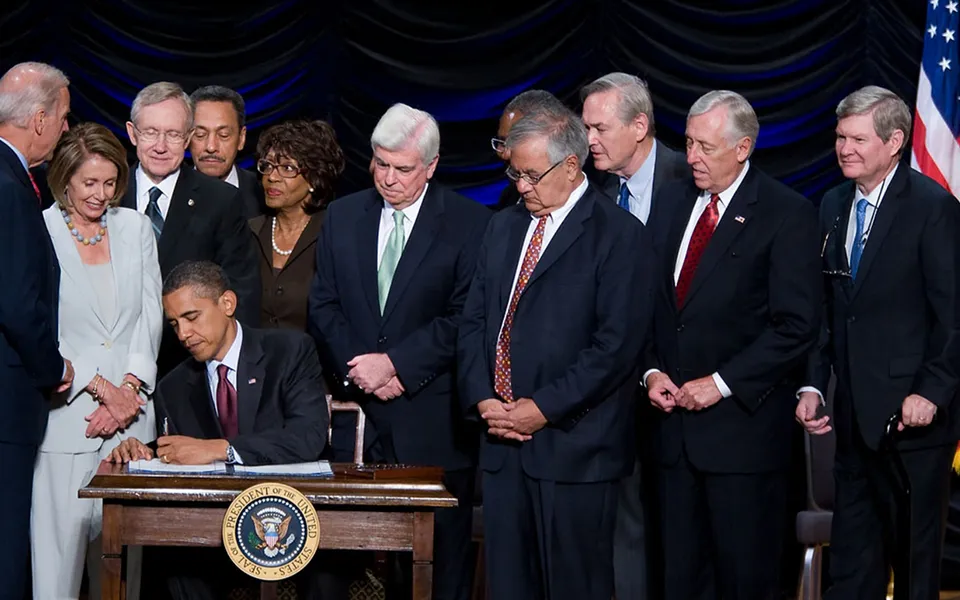
The Dodd-Frank Act reformed the US financial system, imposing stricter regulations to prevent the excesses of the past. One of its main goals is to make sure banks and financial institutions operate more safely, avoiding systemic risk. The creation of the Consumer Financial Protection Bureau (CFPB) strengthened consumer protection, with stricter rules for mortgage lending.
2. RESPA (Real Estate Settlement Procedures Act)
The RESPA ensures that homebuyers receive clear, detailed information about the costs of real estate transactions, and it prohibits abusive practices such as hidden fees and illegal arrangements between banks and real estate agents. The idea is for buyers to know exactly what they are paying for, with no surprises.
3. TILA (Truth in Lending Act)
Under TILA, lenders must give borrowers complete, standardized information about loan terms, such as interest rates and total costs. This ensures greater transparency and keeps consumers from getting into loans they do not fully understand.
4. ECOA (Equal Credit Opportunity Act)
The ECOA prohibits discrimination in lending, ensuring that everyone has fair access to financing regardless of race, sex, religion or other personal factors. This promotes fairness in the financial and credit markets.
5. UMDA (Uniform Mortgage Disclosure Act)
The UMDA standardizes the way mortgage information is disclosed, ensuring that consumers clearly understand all the costs involved in financing a home and avoiding unpleasant surprises along the way.
6. AML (Anti-Money Laundering)
The Anti-Money Laundering laws require financial institutions to monitor and report suspicious transactions that may be linked to money laundering. This makes the real estate sector safer and keeps the market from being used for illicit purposes.
Ability-to-Repay and DTI (Debt-to-Income)
One of the most significant changes in mortgage lending after the crisis was the introduction of the Ability-to-Repay rule. This requirement obliges banks and mortgage brokers to make sure borrowers can genuinely afford to repay the loan. Unlike the pre-crisis period, when it was common for banks to approve mortgages without proper proof of income, today lenders are required to obtain documents proving that the borrower has stable income sufficient to make the payments.
In addition, the Debt-to-Income (DTI) method brought more control over how much of their income borrowers commit to debt. DTI measures the ratio between a person's total debt and their gross monthly income. As a rule, most mortgage loans require that the borrower's debt payments not exceed 43% of their verified income. This ensures people do not take on more debt than they can handle, minimizing the risk of default.
Where the market stands today
Since these measures were put in place, the US real estate market has operated in a much more balanced and secure way. The number of subprime loans has dropped dramatically, and most of the loans made today go to borrowers with good credit and proven ability to pay.
In terms of housing inventory, the US currently has a relatively low supply, around 2 to 3 months of inventory, which means demand remains high. However, this demand is fueled by a more controlled market, where lending is much stricter. Roughly 80% of the mortgages approved in recent years went to people with solid credit, in contrast with the pre-2008 period.
Delinquency and foreclosure rates are at historically low levels, which shows that homebuyers are in a better position to meet their financial obligations. On top of that, the market is being driven by a stronger economy and robust regulation that protects everyone involved in buying and selling real estate.
Conclusion
The 2008 housing crisis was a turning point that led to a deep overhaul of the US real estate and financial markets. With the creation of laws such as the Dodd-Frank Act, RESPA, TILA, ECOA, UMDA, and the AML measures, along with the Ability-to-Repay requirement and the Debt-to-Income method, today's market is much safer, more transparent and more balanced. Income verification requirements and the limit on debt commitment are important barriers that keep the mistakes of the past from repeating. Today's landscape is far more stable, with a controlled market monitored by regulators who aim to protect both consumers and the financial system as a whole. This gives us confidence that a crisis like 2008 is very unlikely to happen again.