The 5-year rule: why time is the best risk filter in the US real estate market

In this article
For many investors, the biggest barrier to entering the US real estate market is the fear of a "bubble" or a sudden price correction. However, when we analyze the last 50 years of economic data, we see that the risk in real estate is not necessarily in the "where" or the "how much", but rather in the "how long".
In the capital markets, we hear that "time in the market beats timing the market." In real estate, this is an even deeper mathematical truth. There is a magic window (the 5 years) that drastically reduces the probability of losing capital.
The secular trend: 50 years of resilience
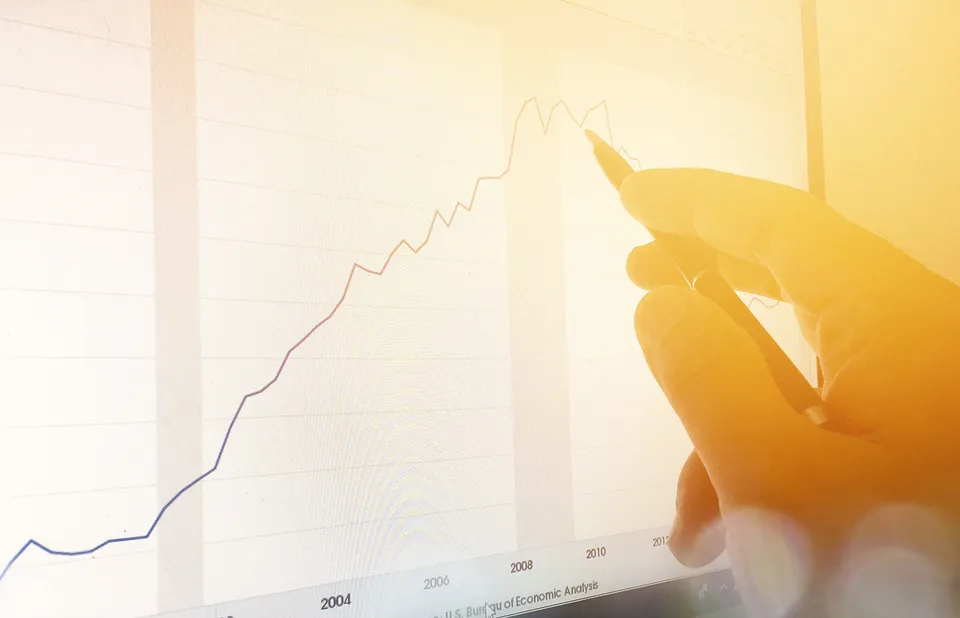
Looking at the chart of median home prices in the US (data from FRED - Federal Reserve Economic Data) since 1974, the first thing that jumps out is not the drops, but the constant upward slope.
Historically, the US real estate market has an average nominal appreciation that keeps pace with or beats inflation. In approximately 88% of quarters over the last 50 years, prices were higher than the year before. Drops are rare, usually short, and tend to be followed by periods of strong recovery.
History's "stress test": the 2008 crisis
To understand the power of the 5-year window, we need to look at the worst possible scenario. Imagine an investor who had the worst timing in modern history: he bought a property at the very peak of prices in 2007, right before the crisis sparked by subprime.
The scenario: The market plunged and the property's value melted away over the following years.
The recovery: According to the national price index, those who bought at the 2007 top and had the staying power to hold on to the asset saw the market value return to the original purchase price between 2012 and 2013.
In other words, even in the face of the biggest real estate crisis of the last century, the "resilience window" needed to avoid losing capital was approximately 5 years. For ordinary correction cycles, 5 years are more than enough for the market to absorb volatility and return to its growth path.
Probability vs. time: what the numbers say
If we try to predict the price of a property 12 months out, the chances of being wrong are considerable, because we are exposed to interest rate swings and political news. However, when we widen the horizon:
1-year window: Moderate risk of nominal volatility and a high risk of loss due to transaction costs.
3-year window: The risk of nominal loss drops significantly, but the investor may still be at a loss after deducting sales commissions.
5-year window or longer: The statistical probability of selling for less than the total acquisition cost (including expenses) becomes close to zero, based on half a century of US market history.
Conclusion
For the investor planning a life transition to the United States within 3 to 7 years, real estate should not be seen as a short-term bet, but as an anchor for capital.
Real estate risk is, to a large extent, a forced liquidity risk. If you are not forced to sell during a down cycle, the US market has historically ensured that time will work in your favor. Holding the property for at least 5 years is not just a prudent recommendation; it is the most effective strategy to neutralize volatility and preserve your wealth in dollars.
Sources:
Federal Reserve Economic Data (FRED) - Median Sales Price of Houses Sold in the US.
S&P CoreLogic Case-Shiller Home Price Indices.
National Association of Realtors (NAR) - Historical Trends in Homeownership.